Shantideva Center is thrilled to welcome back Tsenshap Serkong Rinpoche II for a series of teachings on A Guide to the Bodhisattva’s Way of Life and “Chanting the Names of Manjushri.” This is a rare and precious opportunity to receive the oral transmission of the Manjushri Namasangiti Sutra (“Chanting the Names of Noble Manjushri”) from a deeply revered scholar and practitioner. Reciting this profound text invokes the blessings of Manjushri—the embodiment of wisdom—purifying negative karma, removing obstacles, and supporting clarity and spiritual growth. This sacred practice deepens one’s understanding of reality and cultivates the wisdom necessary for awakening. To receive the oral transmission of “Chanting the Names of Noble Manjushri” on Sunday, September 21, 2025 in-person attendance is required. Participants joining via Zoom are welcome to observe but will not receive the transmission.
Serkong Rinpoche will continue his teachings on the celebrated work A Guide to the Bodhisattva’s Way of Life (Bodhicaryāvatāra) by Shantideva—our center’s namesake. As a monk at the great Nalanda monastic university in the 8th century CE, Shantideva was taken to be lazy and unaccomplished until one day when he delivered the perfectly-formed and complete teachings that would be transcribed as A Guide to the Bodhisattva’s Way of Life. Serkong Rinpoche will teach from this famous work, which describes in poetic verse the path of spiritual development of the bodhisattva, from ordinary person to fully awakened buddha. Rinpoche’s approach to teaching is down-to-earth and warmly humorous, making connections between the Buddha’s teachings and the modern challenges to applying them today.
Receiving the Transmission of “Chanting the Names of Noble Manjushri”
To receive the oral transmission of “Chanting the Names of Noble Manjushri” on Sunday, September 21, 2025 in-person attendance is required. Participants joining via Zoom are welcome to observe but will not receive the transmission.

 Modern-Day Dharma: Interview with Tsenshap Serkong Rinpoche II
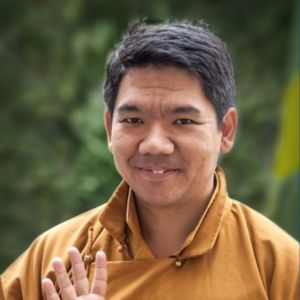 Modern-Day Dharma: Interview with Tsenshap Serkong Rinpoche II
In this article, Rinpoche talks about how Dharma teachings could evolve and how parties and Instagram might even fit in.
Yoda and Tsenshap Serkong Rinpoche
 Yoda and Tsenshap Serkong Rinpoche
Was Yoda based on this famed Buddhist master? Learn about one scholar’s view and Rinpoche’s life and personality.
What is the Dharma?
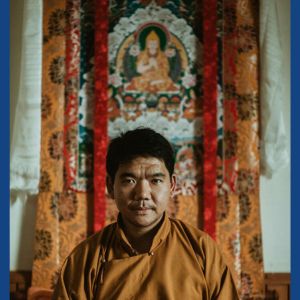 What is the Dharma?
In this short video clip, Tsenshap Serkong Rinpoche II talks about how Dharma addresses the root of all problems in our lives.
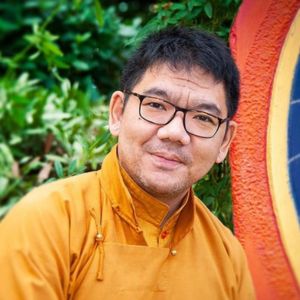
Tsenshap Serkong Rinpoche was born in the Spiti valley, in India, in 1984. At the age of two, Tsenshap Serkong Rinpoche II (1984 – present) pointed to the photo of the recently deceased Assistant Tutor of the 14th Dalai Lama and said, “That’s me!” When he was about three years old he was recognized by His Holiness the Dalai Lama as the incarnation of Kyabje Tsenshap Serkong Tugse Rinpoche (1914-1983), who was one of the seven master debate partners to His Holiness the Dalai Lama.
Rinpoche began his Buddhist studies and training at Ganden Jangtse Monastery in South India. After deciding to continue his work for the Dharma as a lay person, he completed his education at the Institute of Buddhist Dialectics in Dharamsala. On the advice of the Dalai Lama, Rinpoche completed three years of intensive study of English in Canada.
Rinpoche teaches at Dharma Centers around the world, combining his experience of the study and practice of Buddhism with his acquaintance with the Western world. His fascinating teachings are full of wisdom, grace and humor. Rinpoche feels privileged to continue the responsibilities of Tsenshap Serkong Tugse Rinpoche to teach and benefit people as much as he can.
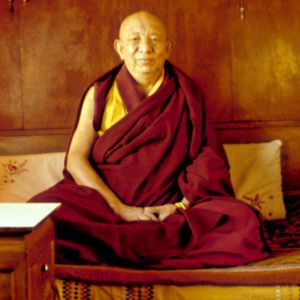
Tsenshap Serkong Rinpoche I (1914-1983)
Kyabje Tsenshap Serkong Tugse Rinpoche was born on July 27, 1914, in the area of Loka in southern Tibet. His father was one of the most outstanding masters of the previous century, the great Serkong Dorjechang, the incarnation of Marpa the translator, his mother the incarnation of Marpa’s wife Dagmema and Tsenshap Serkong Rinpoche the incarnation of Marpa’s son Darmadodey.
Tsenshap Serkong Rinpoche studied with masters from all the four major traditions of Tibetan Buddhism and in 1948 was appointed as one of the seven Tsenshap or Master Debate Partners to His Holiness the Fourteenth Dalai Lama. Tsenshap Serkong Rinpoche served His Holiness in this capacity for the rest of his life and imparted to His Holiness many lineages, initiations and oral transmissions. He accompanied His Holiness to China in 1954 and came in exile to India in 1959.
As a master of both sutra and all four classes of tantra, Tsenshap Serkong Rinpoche traveled extensively throughout India and Nepal to give teachings and initiations and help the monasteries restart their rituals. He made five trips to Spiti, where, in the manner of Atisha, he reformed and revitalized the monasteries and the Buddhist tradition of that remote mountain region. He also made two tours of North America and Europe.
Taking on all obstacles to the welfare and works of His Holiness the Dalai Lama, Tsenshap Serkong Rinpoche passed away in full control and in accordance with his intentions, in the manner of the Buddha Shakyamuni, on August 20th, 1983 in Kyipar, Spiti, India. In memorial, His Holiness praised his former Master Debate Partner as a “real Kadampa Geshe”, someone who always remained humble in the truest sense.
Tsenshap Serkong Rinpoche, one of the main teachers of His Holiness the Fourteenth Dalai Lama, was also Dr. Alexander Berzin’s principal teacher. His down-to-earth manner, practical approach and great sense of humor endeared him to both Tibetan and Western students alike. A master of all traditions of Tibetan Buddhism, he combined the highest qualities of being a learned scholar, an accomplished practitioner, and a skillful, compassionate teacher. In “A Portrait of Tsenshap Serkong Rinpoche”, Dr. Berzin shares his personal memories of the nine years he spent as his close disciple, interpreter and English secretary. Serkong Institute for Buddhist Studies